
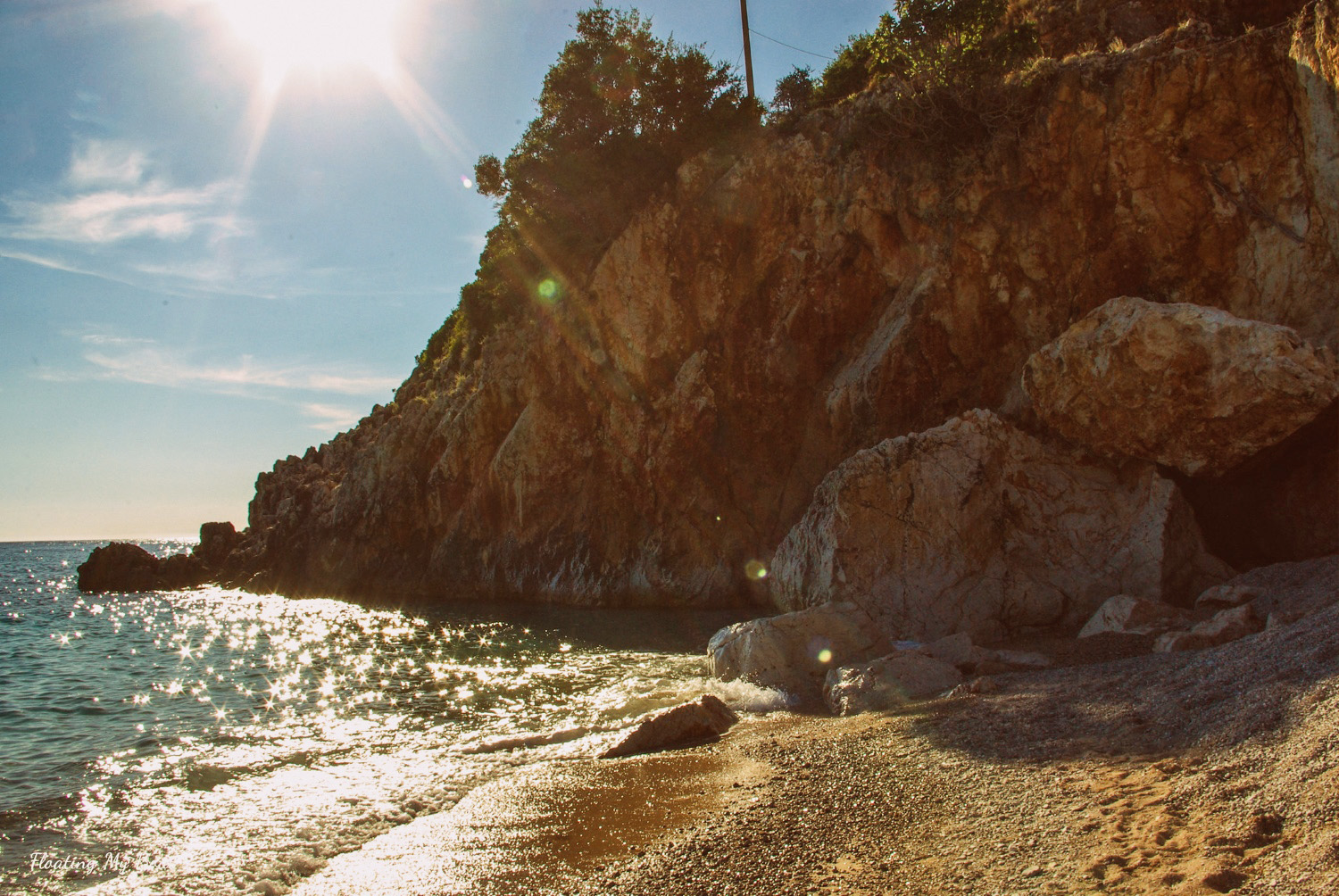
Gjipe Beach: Albania's Most Dramatic Canyon Cove
Gjipe Beach — Plazhi i Gjipes — sits at the mouth of the Gjipe Canyon (Kanioni i Gjipes) on the Albanian Riviera, halfway between Dhërmi and Himara. The beach is the only point where the canyon meets the Ionian Sea, and the visual result is one of the most distinctive natural settings in the country: towering limestone walls on both sides, a mixed pebble and sand floor at the canyon mouth, and water the colour of deep turquoise extending from the cliff faces into the open Ionian. Gjipe is consistently ranked as the country's best beach. What that ranking misses is the access reality — there is no road to the beach, and reaching it requires either a 45-minute hike from a car park 2.5 km away or a 20-minute boat ride from Himara.
← Back to Beaches in AlbaniaWhat Makes Gjipe Beach Special
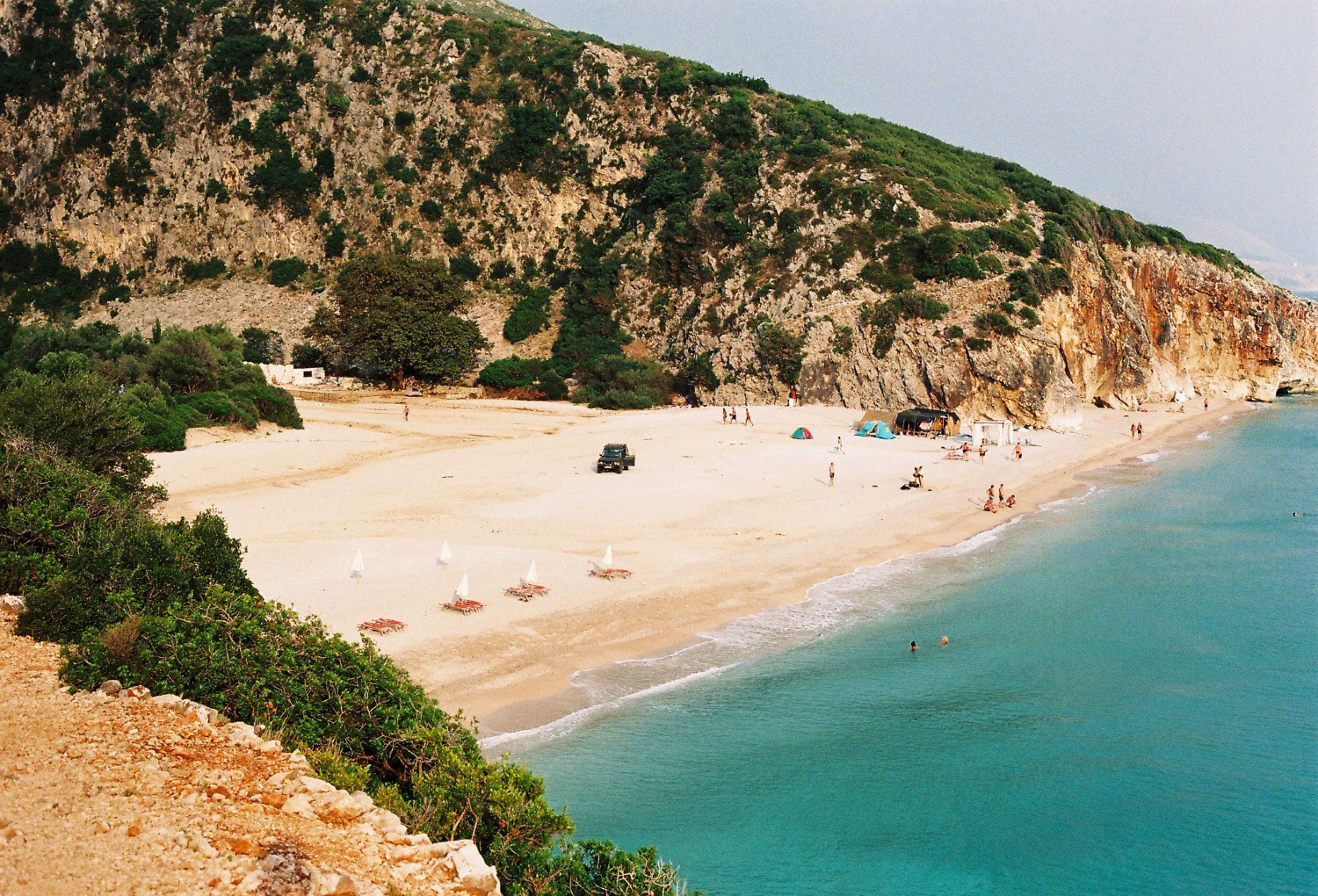
The canyon is what you come for, and the canyon is unlike anything else on the Albanian coast. Gjipe Gorge is a narrow limestone canyon approximately 1.5 km long, with cliff walls rising 50 to 100 metres on both sides. The walk from the car park follows the gorge floor — flat rocky terrain, forested on both sides, with increasingly dramatic cliff walls closing in as you approach the sea. The beach at the mouth is where the canyon stops and the Ionian starts. The walls continue into the water on both sides of the cove, creating a naturally enclosed bay with zero road noise and very limited boat traffic.
The water at Gjipe has exceptional clarity. The enclosed rocky sides and pebble floor at the mouth mean there is almost no sand suspension, and the water runs a deep, saturated turquoise. Underwater visibility on a calm morning exceeds eight metres. From the beach, the view back up through the canyon is the one that appears in most travel photography of Albania — the canyon walls converging toward the gorge, olive-green hillsides above the cliff tops, and the deep Ionian blue in the foreground.
Sand, Pebble or Rocky?
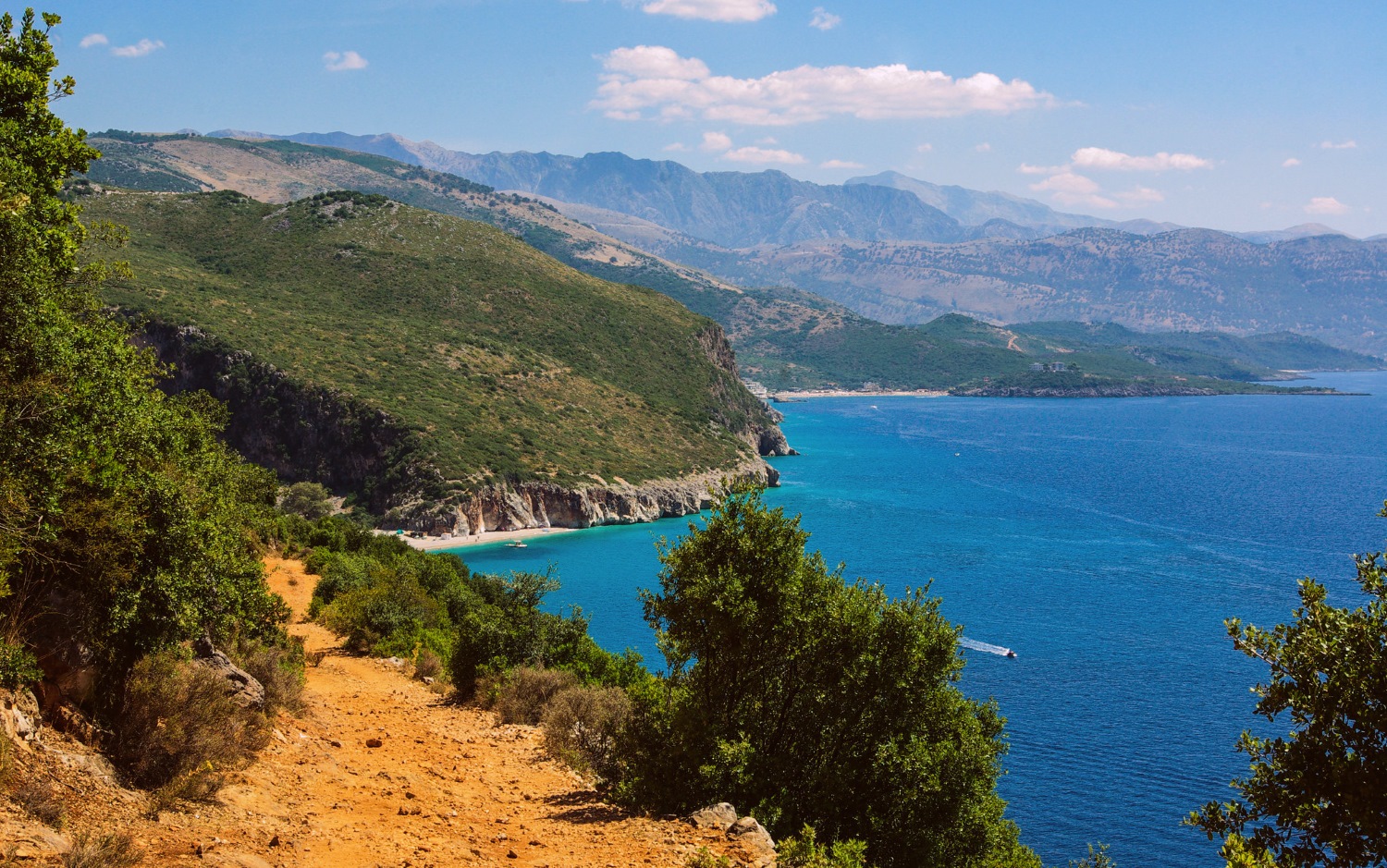
Gjipe has a mixed beach surface — predominantly smooth pebble with sandy patches, particularly toward the centre of the bay where the canyon stream (seasonal) deposits fine sediment. The pebble is more varied in size and texture than at Drymades or Dhërmi, and the beach floor transitions quickly from pebble to flat rock around the cliff bases. Water shoes are recommended for the entry.
Water Depth and Clarity
The water deepens quickly from the shore. At five metres out you are already at one and a half metres depth; by ten to fifteen metres the depth reaches three to four metres and the colour shifts to the deep Ionian blue. Clarity is consistently exceptional — Gjipe is one of the clearest water beaches in Albania due to the rocky floor and limited sand. Snorkelling around the cliff base gives you the best underwater experience: rocky terrain, small caves, and fish populations that are more varied than at exposed sandy-floor beaches.
Is It Safe for Swimming?
Yes. The enclosed cove limits wave exposure and there are no significant currents in the bay itself. The pebble entry requires water shoes. There are no lifeguards. The swim around the cliff bases at both sides of the cove involves navigating rocky sections — suitable for confident swimmers only. Do not enter the water at the cliff bases if the sea is rough, as waves reflect off the rock and create unpredictable surge.
How to Get to Gjipe Beach
By Car
From Himara, drive north on SH8 ~10 km, look for the signed turnoff for Gjipe Beach. Follow 2.7 km to the car park. Car park: 400 lek (4 EUR) for 12 hours, 700 lek overnight. Cash only. Standard cars cannot proceed past the car park. From the car park, hike 1.5 km (30–45 min) to the beach.
By Bus
Any furgon on the SH8 can drop you at the Gjipe Beach SH8 turnoff. From the highway: 2.7 km walk to the car park (30 min), then 1.5 km through the canyon to the beach (30–45 min). Total: ~60–75 min walking.
By Boat (Recommended)
The easiest access option. Boat tours and water taxis from Himara waterfront reach the beach in ~20 min. Private water taxi: ~15–20 EUR one way. Multi-beach day tour including Gjipe: 30–60 EUR per person. Ask at the Himara waterfront in the morning.
Hiking Routes
The canyon trail from the car park is the standard route. A second route from Vuno village follows a coastal path (~5 km) — recommended only for experienced hikers with navigation ability.
Best Time to Visit Gjipe Beach
June is the best month. Water temperature is 22–24°C, the canyon trail is manageable before the July and August heat makes the exposed section uncomfortable, the beach has basic facilities open (the Gjipe Eco Campground and simple drinks vendors), and the crowds are well below peak levels. July and August: the beach is at its busiest, but "busy" at Gjipe means perhaps 100 to 200 people on a peak afternoon rather than the 1,000-plus at Dhërmi. The canyon trail in July midday heat is demanding — go early or late in peak summer and drink water on the hike.
September: excellent — warm water, significantly reduced crowds, and the canyon has a particular atmosphere in the softer autumn light. October through May: the beach is near-empty, the campground is closed, and the hike in cooler weather is easier.
Amenities and Facilities
Sunbeds & Umbrellas
A small number of umbrella and sunbed setups available informally in summer. Do not rely on them being available — bring your own mat and shade.
Bars & Restaurants
A basic drinks and snacks vendor operates in season. The Gjipe Eco Campground bar is open to day visitors. Neither provides a full restaurant service. Bring water and food for the day.
Car Park
Car park 2.7 km from the beach. 400 lek (4 EUR) for 12 hours, 700 lek overnight. Cash only. A small free area exists a short distance before the paid car park, with limited spaces.
Toilets & Showers
Basic toilet and shower facilities at the Gjipe Eco Campground near the beach. Day visitors can use them — ask at the campground. No other toilet infrastructure at the beach.
Crowd Levels and Atmosphere
Gjipe is not a beach you stumble onto accidentally. The access distance creates an effective filter — the people who make the 45-minute hike or pay for a boat ticket are typically hikers, photographers, campers, and serious beach tourists rather than casual day visitors. The result is a noticeably more self-sufficient crowd. Peak season sees around 100 to 200 people on a clear August weekend — enough to feel alive, not enough to feel overcrowded.
The canyon walls and the shape of the bay create a natural acoustic enclosure that amplifies the sea and reduces any background noise from the hillside. It is one of the few beaches in Albania in peak season where you can hear the water.
Things to Do at Gjipe Beach
Canyon Hike
The 1.5 km trail from the car park through the gorge to the beach is the defining experience of Gjipe. The canyon walls close from roughly 20 metres wide at the car park to a narrow notch near the sea. Allow 30–45 minutes each way.
Snorkelling
The cliff bases at both sides of the cove are excellent — rocky terrain, small caves, and visibility of 8-plus metres on a calm morning.
Camping
Gjipe Eco Campground operates near the beach from June to September. Tent pitches, basic facilities, bar, and the ability to watch the canyon at sunrise before day visitors arrive. Book in advance for July and August.
Cliff Swimming and Exploration
Swimming around the base of the canyon walls is one of the signature Gjipe experiences. The rock formations continue into the water and create shallow underwater caves accessible by surface swimming.
Photography
The view back up through the canyon from the beach at different times of day is one of Albania's most photographed landscapes. Early morning and late afternoon give the best light on the cliff walls.
Bunker Exploration
Several Enver Hoxha-era concrete bunkers are visible along the canyon trail, part of the approximately 173,000 built across Albania between 1968 and 1986. The scale of the bunker programme becomes tangible when you see them in situ.
Gjipe Beach in Photos
Where to Stay Near Gjipe Beach
For accommodation near Gjipe Beach — camping at the beach itself and guesthouses in nearby Dhërmi and Himara — browse the full listings below.
Find Your Stay Near Gjipe Beach
From camping at the beach to boutique guesthouses in Himara — browse handpicked accommodation and book instantly. Book the Gjipe Eco Campground early for July and August.
Local Tips and Insider Advice
Nearby Beaches and Day Trips
Drymades Beach
Accessible by boat or car — fully developed beach club scene on a white pebble cove.
Drymades guideDhërmi Beach
5 km north — the Riviera's most famous beach strip with beach clubs and nightlife.
Dhërmi guideAquarium Bay
Accessible by boat from Himara on the same day trip as Gjipe — a wild volcanic pebble cove.
Aquarium Bay guideGrama Bay
A historic cove south of Gjipe accessible only by boat — known for ancient Greek and Latin inscriptions carved in the cliff face.
Frequently Asked Questions
The beach is free. The car park charges 400 lek (4 EUR) for 12 hours. Access by boat from Himara costs approximately 15–20 EUR one way for a water taxi, or 30–60 EUR as part of a multi-beach tour.
With preparation, yes. The 45-minute hike in summer heat with young children requires significant planning — water, shade, timing. The beach itself is manageable with water shoes. Families with children under 5 typically find the logistics too demanding and opt for a boat visit or choose a closer beach.
June and September. The hike is cooler, the water is warm, crowds are manageable, and the facilities are open. Early July is fine if you start the hike before 9am.
The car park is approximately 10 km north of Himara on the SH8, taking 15 minutes by car. The beach is 2.5 km from the car park on foot (30–45 minutes hiking).
There is a paid car park 2.5 km from the beach. Cost: 400 lek (4 EUR) for 12 hours. Cash only. Standard cars cannot proceed past the car park.
Yes. The Gjipe Eco Campground operates near the beach from June to September with tent pitches, basic facilities, and a bar. Book in advance for July and August. Wild camping on the beach is also practised.