
Aquarium Bay: Albania's Most Dramatic Pebble Cove on the Ionian Coast
Aquarium Bay — Gjiri i Akuariumit in Albanian — is a compact, fully wild cove tucked between Jale Beach and Livadhi Beach on the southern Ionian coast. It earns its name from the water: a shallow lagoon of blue-green clarity so intense you can read the seabed from the cliff above. The beach sits roughly 20 minutes south of Himara by car, and arriving here feels nothing like pulling up to a developed resort strip. There are no loungers, no bars, no shade structures. Just volcanic rock, sharp-edged pebble, and one of the most visually striking stretches of water on the Albanian Riviera.
← Back to Beaches in AlbaniaWhat Makes Aquarium Bay Special
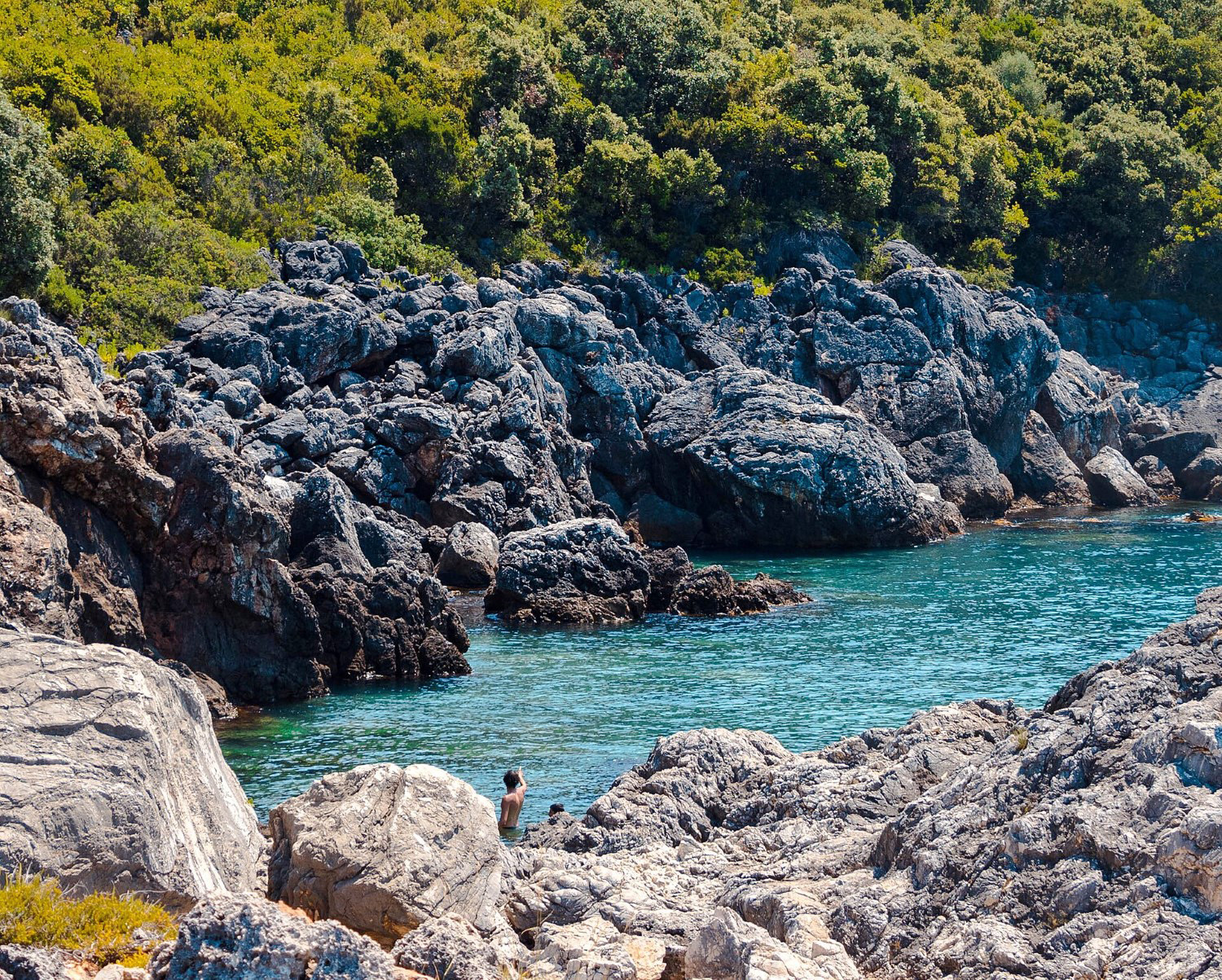
Aquarium Bay is the kind of place that photographers and solo travellers talk about in hushed tones. The cove is enclosed on three sides by volcanic cliffs that reach 8–10 metres above the waterline. Those cliffs are sharp-edged basalt, and the pebble on the beach is made of volcanic glass fragments — the same material the cliffs are composed of. This creates an unusual visual effect: the shoreline almost glows in afternoon light, alternating between dark rock and pale yellow sand at the water's edge (caused by clay washing down from the cliff face over centuries).
What draws most visitors is the water quality. The lagoon runs around 1.5 metres deep at five metres from shore and reaches 2.5 metres at seven to eight metres out. The seabed consists of small pebbles and two wide flat stone slabs that create a natural platform — stable footing that makes the entry easy despite the rocky surroundings. The water stays clear because the bay faces southwest and is sheltered from the main current, keeping sand and sediment from churning up.
Sand, Pebble or Rocky?
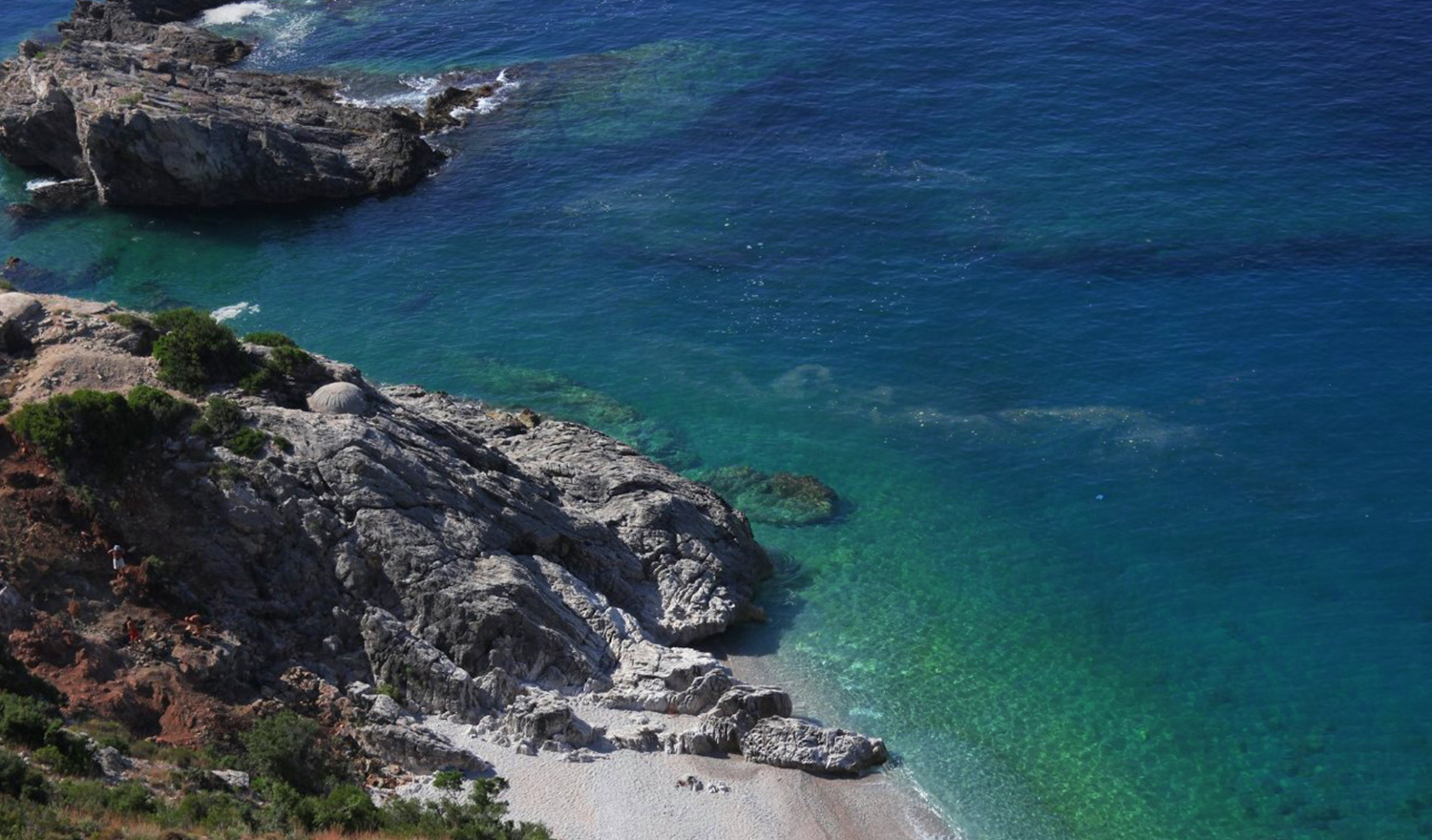
Aquarium Bay is predominantly pebble and volcanic rock. The beach itself measures approximately 25 metres long and 10 metres wide — it is genuinely small. Do not come expecting a long strip of sand. The shoreline is volcanic glass gravel, which is sharp underfoot; barefoot walking is not comfortable and not advisable. At the very edge of the water, a narrow band of soft yellowish sand forms where clay from the cliff erosion has settled — but this only exists within a metre of the waterline.
Water Depth and Clarity
Water depth is shallow and gradual. At five metres from shore you are in 1.5 metres of water; at eight metres out the depth reaches 2.5 metres. The lagoon shape means there is very little wave action inside the cove. Visibility through the water is exceptional — on a calm morning you can see the entire seabed from the cliffside above. The colour shifts from pale turquoise in the shallows to a deeper blue-green at the centre of the cove.
Is It Safe for Swimming?
Swimming is safe for confident swimmers. The enclosed shape of the bay means minimal wave and current interference. Children and nervous swimmers should be cautious: there is no gradual sandy entry, and the volcanic rock edges are sharp. Water shoes are strongly recommended for entering and exiting. For cliff diving, the average depth near the rock faces runs around four metres — enough for a safe jump from a controlled height, but assess each point individually before leaping.
How to Get to Aquarium Bay
By Car
From Himara, take the SH8 north toward Dhërmi for ~15 km, then turn at the Jale area. A rough coastal track runs ~1.5 km southwest to the bay. Park where rocks block the road — the final 150–300 m must be done on foot. Free roadside parking.
By Bus
Take a furgon on the SH8 and ask to be dropped at the Vuno or Jale junction. From Jale, walk ~1.5 km along the coastal track. Return requires flagging down a furgon — check last departure times.
By Boat
The best access option. Water taxis from Himara or Jale Beach drop you directly at the cove (~10–15 EUR round trip from Himara). Departures typically before 11am from the Himara seafront.
On Foot / Hiking
From Livadhi Beach: 30–40 min via the red-white-red trail markers. From Jale Beach: 20–25 min along the flat coastal track. Both routes offer dramatic coastal views.
Best Time to Visit Aquarium Bay
May and June are the best months. The sea temperature is already 20–22°C, the water is at its clearest before any tourist foot traffic begins to disturb the cove, and you will often have the bay entirely to yourself on a weekday. July and August bring more visitors, though "crowded" at Aquarium Bay means perhaps 15–20 people due to the difficulty of access. The bay never reaches the capacity of a car-accessible beach.
September is excellent — water temperatures peak in the high 20s, crowds drop after the 10th of the month, and the light in the afternoon is better for photography. October through April: the bay is effectively deserted. The coastal tracks can be slippery after autumn rain, and there is no support infrastructure at the beach if conditions deteriorate.
Amenities and Facilities
Sunbeds & Umbrellas
None. Aquarium Bay has zero infrastructure. Bring your own mat, umbrella, and all supplies.
Bars & Restaurants
No bar or food vendor on site. The Wild Beach bar (~150 m along the coastal rocks) opens June–August and has cold drinks and limited food — not always staffed. Nearest full dining in Jale (1.5 km) or Himara (~20 min by car).
Parking
Informal free parking on the coastal track, ~150–300 m from the beach. No formal car park. Space is limited but rarely full.
Toilets & Showers
None on site. Nearest toilet facilities at Aquariumi Jale Camping, approximately 20 minutes' walk near Jale Beach.
Crowd Levels and Atmosphere
Even in the height of July and August, Aquarium Bay rarely feels overrun. The 150-to-300-metre mandatory walk from the car, combined with the small size of the cove, acts as a natural filter. The atmosphere is quiet and self-sufficient — people who make the effort tend to be respectful of the space. You will find swimmers, snorkellers, and photographers. You will not find loud beach clubs or vendors with megaphones.
In shoulder season the bay is frequently empty for stretches of hours at a time. Noise from the surrounding cliffs mostly consists of the sea, cicadas, and the occasional boat engine passing offshore.
Things to Do at Aquarium Bay
Snorkelling
The combination of clear water, calm lagoon, and rocky seafloor makes snorkelling here genuinely rewarding. Schools of small fish gather around the flat stone slabs. Bring your own mask and snorkel — nothing is available for rent on site.
Cliff Diving
The rock faces on the north side of the cove average four metres of depth at the base. Check individual entry points before jumping.
Photography
The hour after sunrise and the 90 minutes before sunset produce the best light. The elevated position of the coastal trail gives you an aerial vantage point widely reproduced in travel photography of Albania.
Coastal Hiking
The trail connecting Livadhi and Jale via Aquarium Bay is a genuine highlight of the Himara coastline. It takes 2–3 hours at a casual pace and passes multiple viewpoints.
Picnicking
With no vendor or service in sight, this is the one Albanian beach where bringing a proper packed lunch is standard rather than optional.
Where to Stay Near Aquarium Bay
For the best accommodation options near Aquarium Bay — from budget guesthouses to boutique stays in Himara and Jale — browse the full listings below.
Find the Perfect Stay Near Aquarium Bay
From seafront apartments on the Riviera to guesthouses in Himara — browse handpicked accommodation and book instantly. No hidden fees.
Local Tips and Insider Advice
Nearby Beaches and Day Trips
Aquarium Bay sits at the centre of some of the best beach-hopping on the Albanian Riviera. From the same base:
Jale Beach
1.5 km northeast — the closest organised beach with bars, camping, and accommodation.
Jale Beach guideDhërmi Beach
35 minutes north by car — the Riviera's most developed beach strip with beach clubs and nightlife.
Dhërmi guideGjipe Beach
30 minutes north — a canyon-backed cove accessible via a 30-minute hike or by boat.
Gjipe Beach guideHimara Castle
20-minute drive — one of the best historic sites on the southern coast with panoramic views.
Frequently Asked Questions
Yes. There is no entrance fee, no gate, and no privately operated section. The cove is fully public and fully undeveloped. You pay nothing to visit.
With caution. The rocky entry, sharp volcanic pebble underfoot, and absence of lifeguards or shade infrastructure make it less practical for very young children than a standard sandy beach. Older children who can wear water shoes and swim independently enjoy it very much.
May to early June and the second half of September. The water is warm, access is uncrowded, and the bay is at its quietest. July and August are also fine — the bay never reaches the density of a car-accessible beach — but mornings are less busy than afternoons.
Approximately 15–20 km by road, taking around 20 minutes in light traffic. From the parking point on the coastal track, the beach is a further 150–300 metres on foot.
Informal free parking exists on the coastal track, approximately 150–300 metres from the cove. There is no formal car park. Spaces are usually available, but the access track itself is narrow.
Wild camping at the bay is technically possible but there are no facilities whatsoever. The nearest proper camping options are Aquariumi Jale Camping and Social Camping Jale, roughly 1.5 km northeast near Jale Beach.