Palasë Beach: A Raw Pebble Shore Below Albania's Limestone Cliffs
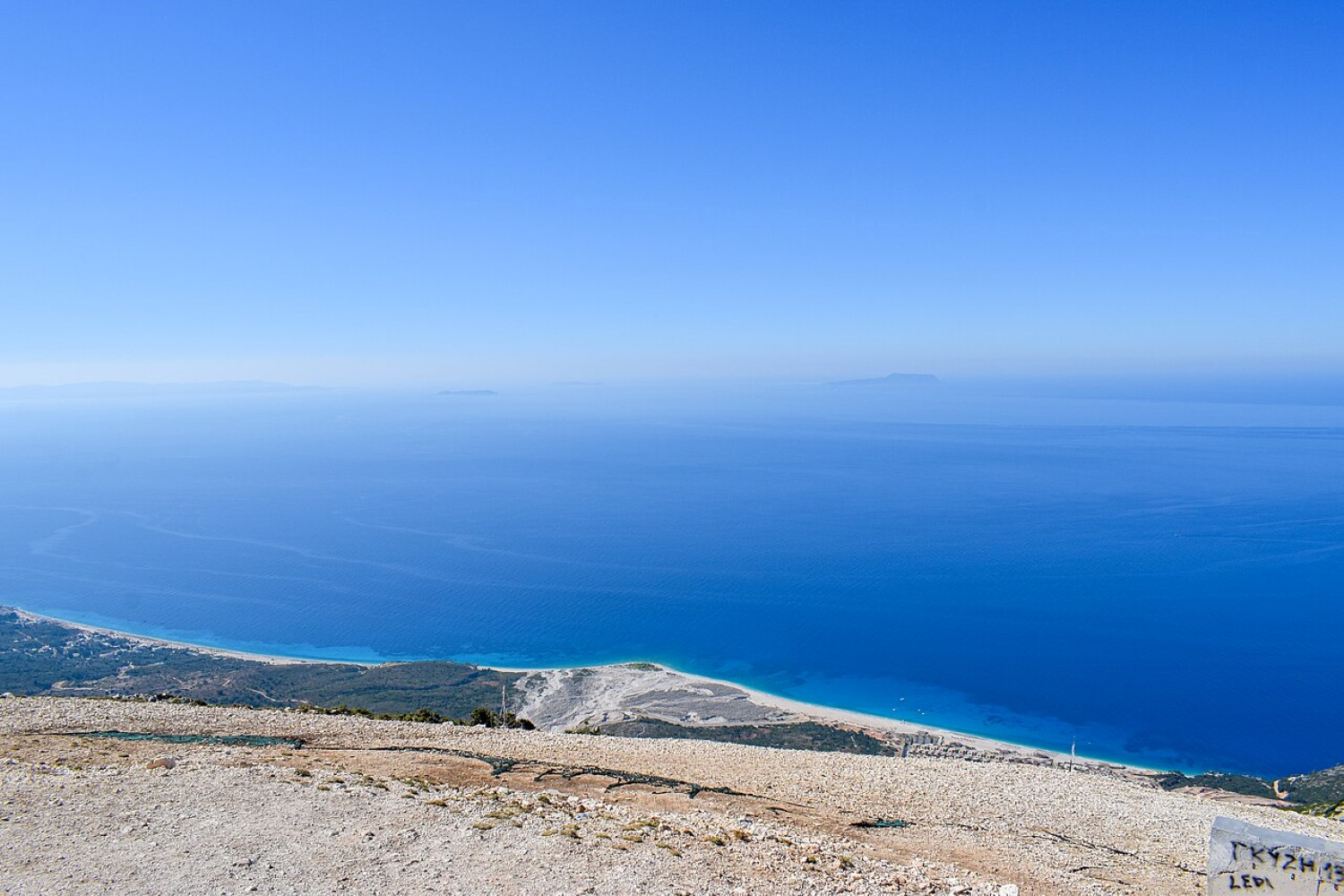
Palasë Beach — Plazhi i Palasës — lies at the foot of the Ceraunian Mountains on the Albanian Riviera, approximately 10 km north of Dhërmi on the SH8. The beach runs for roughly 1.5 to 2 km of grey and white pebble, directly below dramatic limestone cliff faces that rise several hundred metres above the shoreline. There is almost no commercial infrastructure here: no established beach club strip, no continuous sunbed operation, no restaurants at the waterline. What it has is exceptional water clarity, a dramatic mountain backdrop, and the kind of undisturbed stretch that the more developed beaches to the south lost several years ago.
← Back to Beaches in AlbaniaWhat Makes Palasë Beach Special
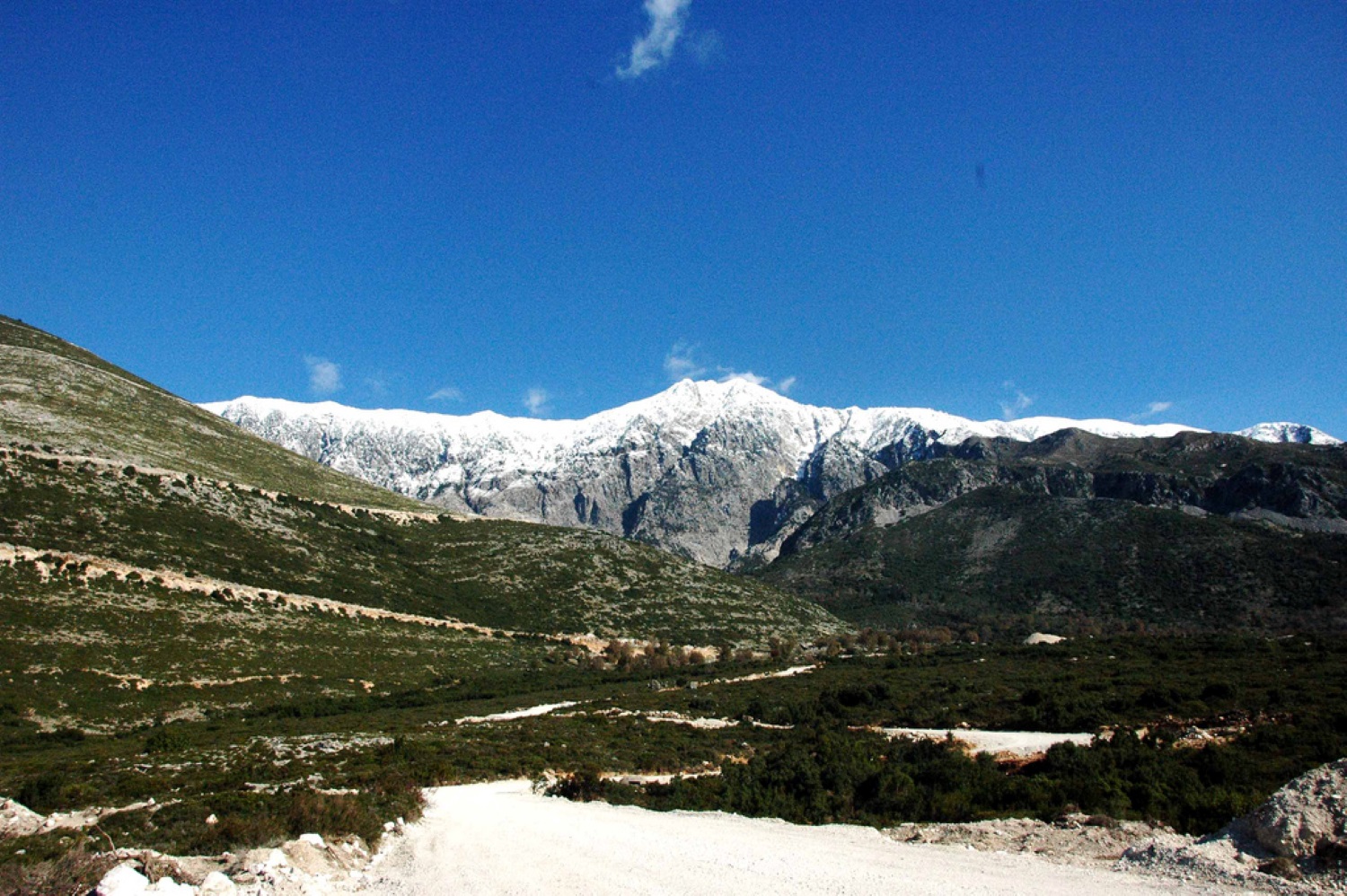
The scale of the backdrop is the first thing you notice. The Ceraunian Mountains fall almost vertically to the coast at this section of the Albanian Riviera, and from the beach at Palasë the cliff faces above you are as visually dominant as the sea in front. The combination produces something different from the other Riviera beaches — a sense of being enclosed by mountains on one side and by open Ionian on the other, with the two scales competing.
The second thing is the quiet. Palasë has not attracted the same investment as Dhërmi or Drymades, partly because the access road is not tourist-friendly and partly because the village above is small. The beach is long enough that even when it is not empty, people spread out and the density stays low. The water quality matches anything on the Riviera. Deep turquoise, transparent to the seabed, with the characteristic Ionian clarity created by the pebble floor.
Sand, Pebble or Rocky?
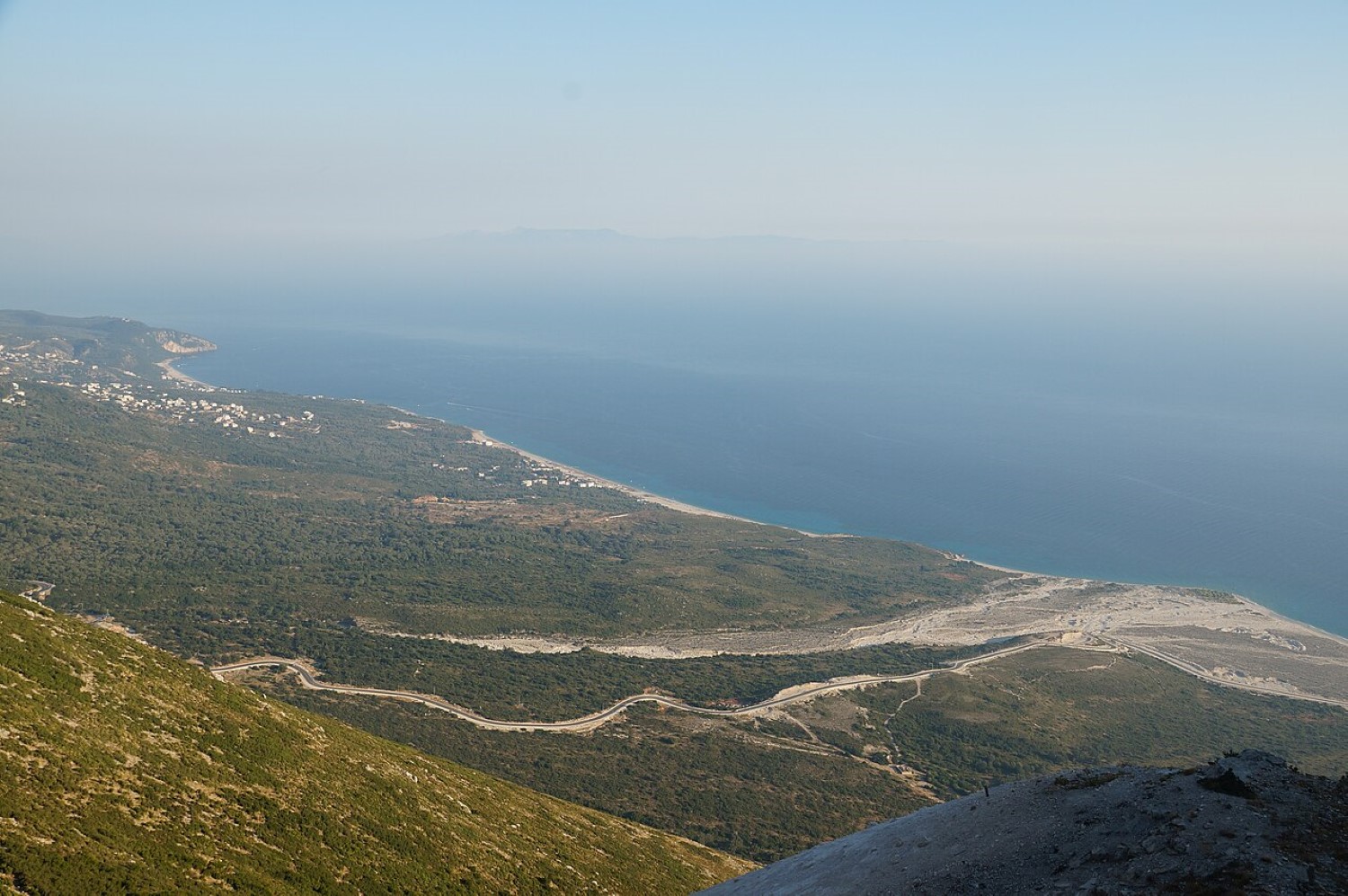
Palasë is a pebble beach throughout — smooth grey and white stones, similar in character to Dhërmi, though slightly more varied in size. The pebble is comfortable to sit on with a mat or towel. Barefoot walking is manageable but not comfortable. Water shoes are the right choice for the beach and for the water entry. The cliff bases at both ends are rocky; do not approach them in anything other than calm sea conditions.
Water Depth and Clarity
The Ionian at Palasë deepens quickly from the pebble entry. By ten metres from shore you are in two to three metres of water. Clarity is very strong — the pebble and rock floor keeps turbidity low and the water takes on the deep blue-green colour visible in most Riviera photography. Visibility of five to eight metres is standard on a calm morning. The cliff base areas at both ends reward snorkelling with rocky terrain and fish populations.
Is It Safe for Swimming?
Yes for confident swimmers. The pebble entry requires water shoes. There are no lifeguards. The open sea exposure at Palasë is slightly greater than at enclosed coves like Gjipe or Ksamil — when there is wind or swell, the waves at Palasë are larger than at sheltered bays. Do not swim at the cliff bases in rough conditions; the swell reflects off the rock and creates surge. On calm days, the swimming is straightforward and the water quality is excellent.
How to Get to Palasë Beach
By Car
From Dhërmi, drive north on the SH8 ~10 km. After the Llogara Pass descent, watch for the turn-off for Palasë on the right. An unpaved access road descends steeply to the beach. Standard cars can manage it slowly. Descent takes 5–10 min. Free parking at the base. From Vlora: ~60 km, ~75 min including the mountain section.
By Bus
Any furgon on the SH8 between Vlora and the southern coast can drop you at the Palasë junction. From the SH8, the beach is several kilometres below — a walk of 30–45 min downhill (significantly longer uphill on return). A taxi between the village and beach is the most practical option.
By Boat
Water taxis from Dhërmi or Himara can access Palasë Beach from the sea. No scheduled service runs here, but private boat hire or a flexible day-trip itinerary can include Palasë alongside other Riviera beaches.
Hiking
The SH8 coastal walking route passes through the Palasë area, connecting the beach with the broader Llogara to Dhërmi trail section. The descent from the village to the beach is the standard foot-access route — steep and requires solid footwear.
Best Time to Visit Palasë Beach
May and June are the optimal months. The water is warm enough for comfortable swimming (20–23°C), the beach is at its least crowded, the access road is dry and manageable, and the mountain scenery — with spring green on the lower slopes — is at its most impressive. July and August bring the most visitors, though Palasë never reaches the density of Dhërmi or Ksamil. The limited infrastructure keeps the beach self-selecting — people who make the effort tend to be beach travellers comfortable with no services.
September is excellent — warm water, reduced visitors, and the limestone cliffs catch the lower autumn light in a particularly photogenic way. October through April: the beach is near-empty, the access road may be muddy after rain, and there are no services of any kind.
Amenities and Facilities
Sunbeds & Umbrellas
A small, informal sunbed operation runs at the beach in July and August. Coverage is limited — perhaps a few dozen sets. Do not rely on availability. Bring your own mat and shade for anything other than peak summer.
Bars & Restaurants
Limited. There is no permanent restaurant at the waterline at Palasë. A basic seasonal bar may operate in peak summer; availability is not guaranteed. The nearest reliable food and drink is in Palasë village (3 km uphill) or Dhërmi (10 km south).
Parking
Informal free parking near the beach at the base of the access road. Space is generally available given the low visitor numbers. No formal car park.
Toilets & Showers
None at the beach. The nearest facilities are in Palasë village or at accommodation properties in the area. The Green Coast Resort near the access road provides organised facilities nearby.
Crowd Levels and Atmosphere
Palasë is consistently among the least crowded beaches on the Albanian Riviera, not because it lacks quality but because the access road and absence of facilities deter casual visitors. In peak season a typical day sees a few dozen people on a long stretch of beach. On weekdays in July you can find yourself alone on sections of the pebble shore for hours at a time.
The atmosphere is self-sufficient and quiet — people who are here have made a deliberate choice to be here, and that shared quality shapes the interaction. There is no background music, no service staff, and no commercial activity creating social focal points.
Things to Do at Palasë Beach
Swimming and Snorkelling
The clear Ionian water and the rocky cliff bases at both ends of the beach make snorkelling productive. Bring your own mask — nothing is available for rent on site.
Cliff Photography
The Ceraunian Mountains are rarely as immediately present as they are at Palasë. The vertical scale above the beach, combined with the water colour below, gives the location a photographic quality that is harder to achieve at the more developed beaches.
Long Beach Walk
The 1.5 to 2 km length of the beach is worth covering on foot. The character of the beach changes along its length — the cliff faces at both ends are different in angle and colour from the central section.
Off-Season Visit
Palasë in late September or October, with empty beach, low sun on the limestone, and the Ionian at its warmest, is one of the most satisfying Albanian beach experiences available. Requires self-sufficiency.
Llogara Pass Viewpoint
30–40 minutes by car uphill on the SH8 — one of the most dramatic views on the entire Albanian coast, looking south over the Riviera with the Ionian visible below.
Palasë Beach in Photos
Where to Stay Near Palasë Beach
For accommodation near Palasë Beach — including guesthouses at Palasë village, properties in Dhërmi, and the Green Coast Resort near the beach access road — browse the full listings below.
Find Your Stay Near Palasë Beach
Village guesthouses or Dhërmi properties put you within 10–15 minutes of this wild pebble shore. Browse handpicked accommodation and book instantly.
Local Tips and Insider Advice
Nearby Beaches and Day Trips
Dhërmi Beach
10 km south — the Riviera's most developed beach strip and the nearest full-service beach.
Dhërmi guideDrymades Beach
Slightly south of Dhërmi — beach clubs and the main diving base on the northern Riviera.
Drymades guideLlogara Pass & National Park
20–30 minutes north by car — pine forest at 1,000 metres altitude with panoramic coastal views.
Gjipe Beach
Further south — canyon-backed cove accessible by hike or boat from Dhërmi/Himara.
Gjipe guideFrequently Asked Questions
Yes, completely free. There is no entrance fee or private operator. A small informal sunbed setup runs in peak season, but large sections of the beach have no charge at any time.
With careful preparation, yes. The pebble entry requires water shoes for all ages. The absence of facilities means full self-sufficiency. Families comfortable with wild beach conditions find Palasë a good option; those expecting resort infrastructure should choose Dhërmi or Ksamil instead.
May, June, and September. The water is warm, the access road is at its best, and the beach is at its least crowded. The mountain scenery is particularly strong in late spring and early autumn.
Approximately 10 km north on the SH8, taking about 15 minutes by car. From the SH8 turnoff to the beach, the descent is a further 3–5 minutes by car on the access track.
Informal free parking near the beach at the base of the access road. Space is generally available. No formal car park.
Wild camping is practised at the beach. There are no facilities. Self-sufficient campers with their own equipment use the beach in spring and autumn. The Green Coast Resort near the access road provides organised accommodation nearby.