The Albanian Alps: A Complete Guide to the Accursed Mountains
The Albanian Alps are the wild, soaring heart of the country's mountains — a serrated wall of limestone in the far north that hikers around the world now put on their bucket lists.
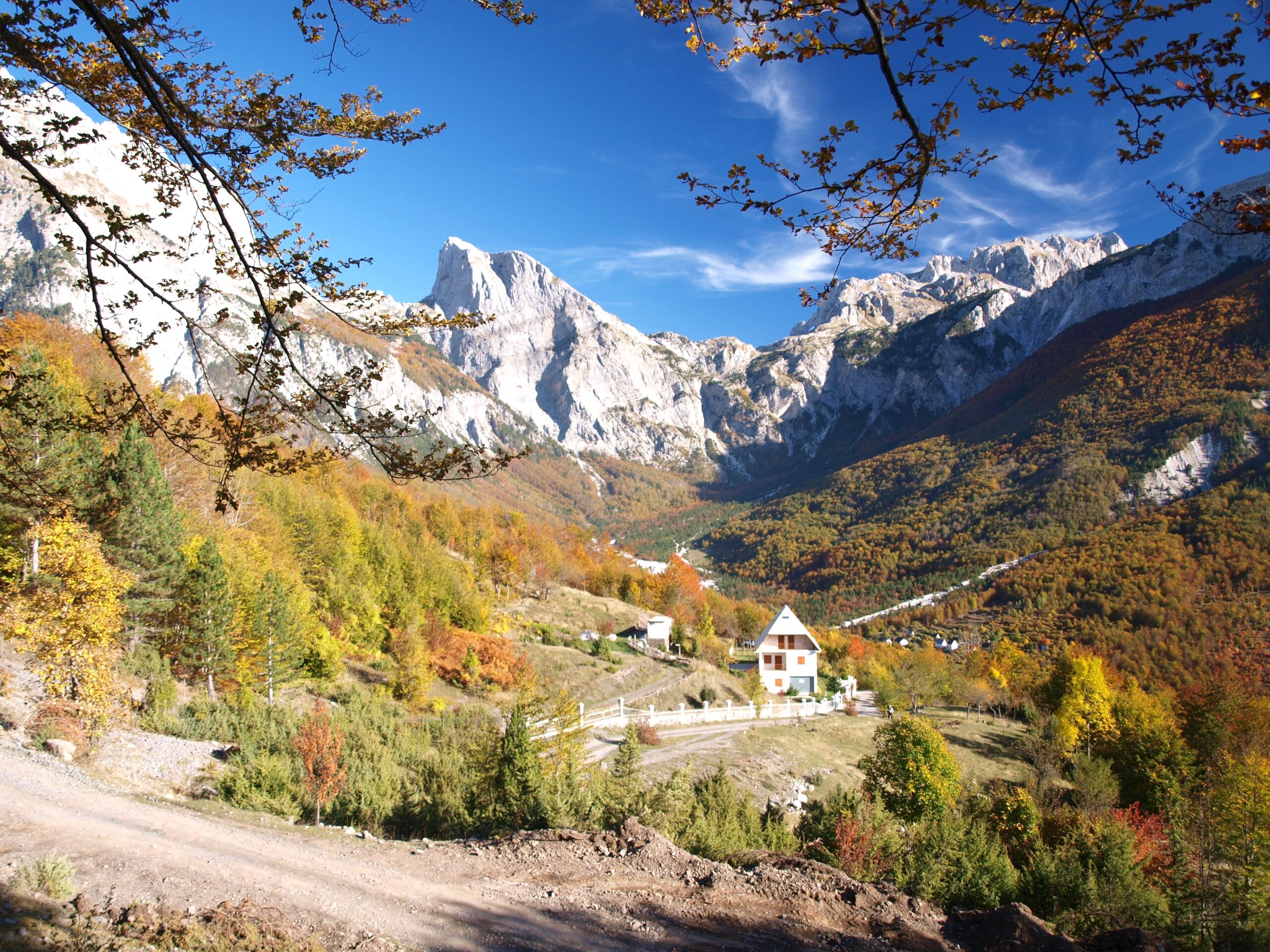
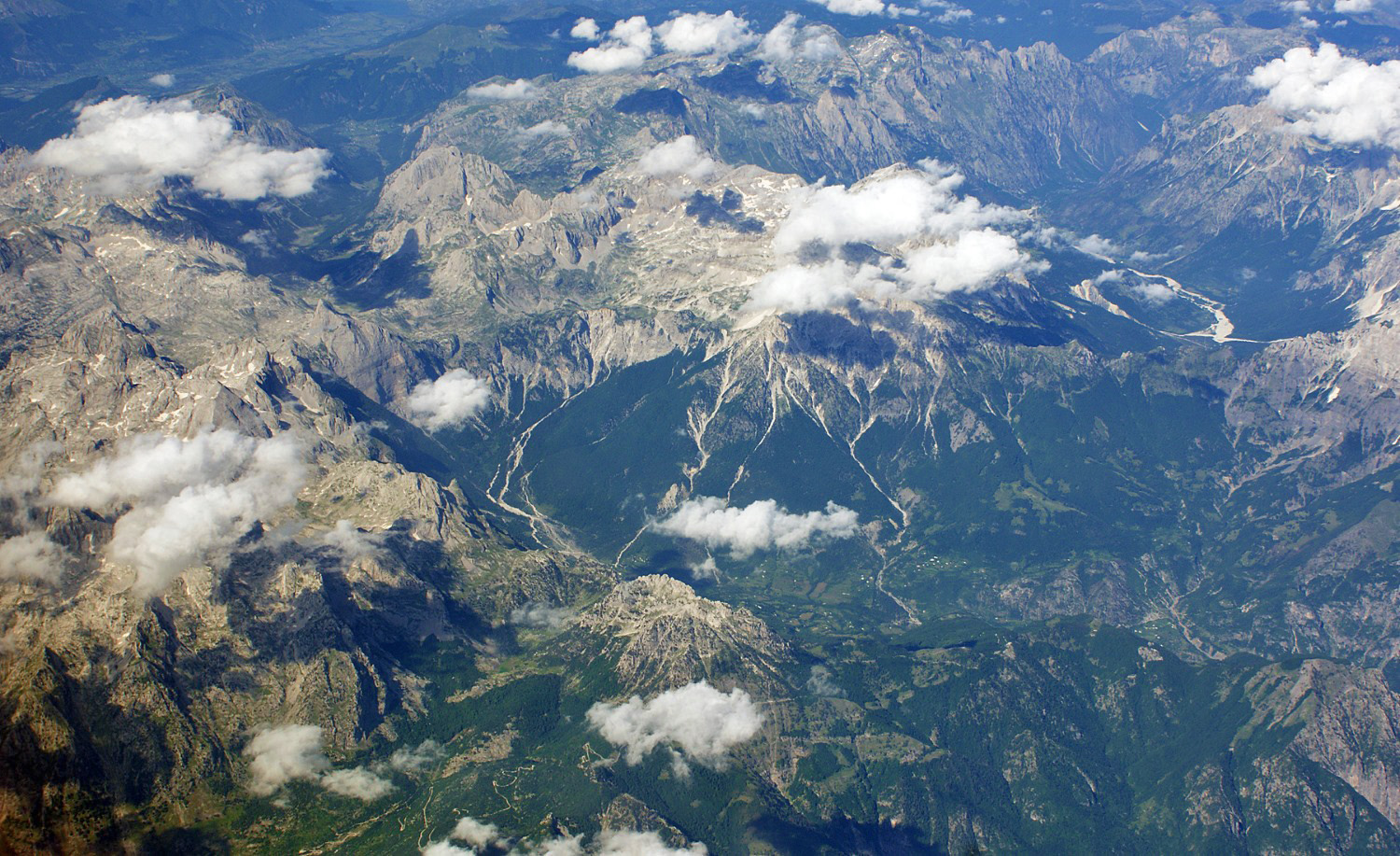
Known in Albanian as Bjeshkët e Nemuna and in English as the Accursed Mountains, this range is the southernmost and highest part of the 1,000-kilometre Dinaric Alps, stretching across northern Albania, western Kosovo, and northeastern Montenegro. They hold Maja Jezercë (2,694 m) — the highest peak of the entire Dinaric Alps and the second-highest in Albania — and the two most beautiful valleys in the country: Theth and Valbonë. If you only have time for one mountain region in Albania, this is the one.
The nearest major gateway is Shkodër in the northwest, where almost every Alps itinerary begins. This guide is your hub for the whole northern range — from a first cable-car-free valley wander to the technical high summits — and it feeds into our detailed cluster guides for the individual hikes and peaks.
Quick Overview: The Albanian Alps
One range, many names. Here is everything you need to orient yourself before planning a trip into northern Albania's high country.
Why the Albanian Alps Are Special
These are some of the most rugged and least-explored mountains in Europe — and, remarkably, they were almost entirely off the international map until a decade ago.
After the Alps proper, the Accursed Mountains are the most heavily glaciated range in Europe south of the Scandinavian ice sheet. You get steep limestone slopes, deep glacier-carved valleys, and sharp, pointed peaks that look far bigger than their elevations suggest. The south wall of Maja e Harapit rises about 800 metres in a single sweep — the highest rock face on the entire Balkan Peninsula.
But the range is more than rock and ice. It is a living cultural landscape: its valleys carry the names of historic Albanian highland tribes, stone kulla towers still stand in the villages, and shepherding traditions continue to shape life in the summer pastures. Walking here, you pass working farms and family guesthouses, not resort infrastructure — which is exactly why it feels like the Alps did fifty years ago.
The Two Valleys: Theth and Valbona
The Albanian Alps experience revolves around two valleys, linked by one famous trail. Understand these two and you understand how to plan the whole trip.
Theth
Sits in a bowl of limestone peaks on the western side. Home to the Grunas Waterfall, the Blue Eye of Theth, and a photogenic stone church that has become the emblem of the whole range. It's the more developed of the two valleys for rest days and easy walks.
Valbonë
Lies to the east — a broad, river-braided valley beneath sheer walls, reached via the spectacular Koman Lake ferry. Wilder and quieter than Theth, with a scattering of guesthouses and direct access to the higher eastern peaks.
The classic way to experience both is to walk between them over the Valbona Pass (1,795 m) — a 17-kilometre, 6-to-7-hour crossing that needs no technical skill, just decent fitness. It is the single most popular multi-day route in the country.
Read our full Theth to Valbona hike guideThe Highest Peaks of the Albanian Alps
The range packs an extraordinary number of 2,500-metre-plus summits into a small area. Hire a local guide for the technical peaks.
| Peak | Elevation | Difficulty | Nearest Base |
|---|---|---|---|
| Maja Jezercë | 2,694 m / 8,839 ft | Hard / technical | Theth or Valbonë |
| Maja Grykat e Hapëta | 2,625 m / 8,612 ft | Hard | Valbonë |
| Maja e Popllukës | 2,569 m / 8,428 ft | Hard | Theth |
| Maja e Radohimës | 2,568 m / 8,425 ft | Hard | Theth |
| Mali i Hekurave | 2,560 m / 8,400 ft | Hard | Bajram Curri |
| Kollata | 2,553 m / 8,376 ft | Hard | Valbonë |
| Maja e Harapit | 2,218 m / 7,277 ft | Very hard (big-wall) | Theth |
Albania's single highest summit isn't in this range at all: Mount Korab (2,764 m) stands on the eastern border, in the separate Korab range — making Jezercë the second-highest in the country. See our Mount Korab guide
Maja Jezercë
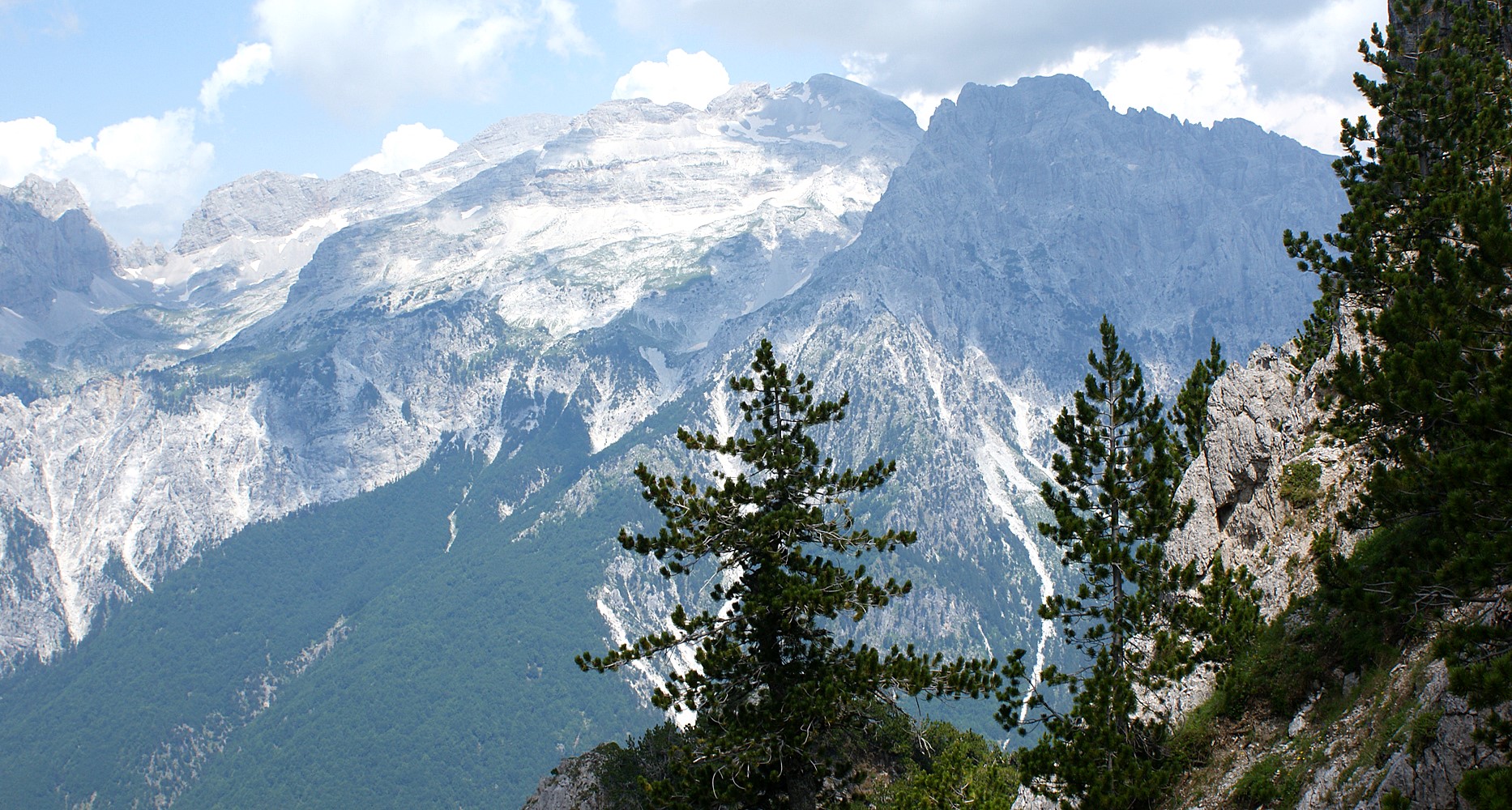
Highest of the Dinaric AlpsAt 2,694 metres (8,839 ft), Jezercë is the highest peak of the entire Dinaric Alps and the second-highest in Albania, after Mount Korab. It is widely described as one of the toughest and most dangerous climbs in the Albanian Alps — a serious, guided objective for experienced mountaineers only, usually approached from the upper valleys above Theth or Valbonë.
Read our Maja Jezercë mountain profile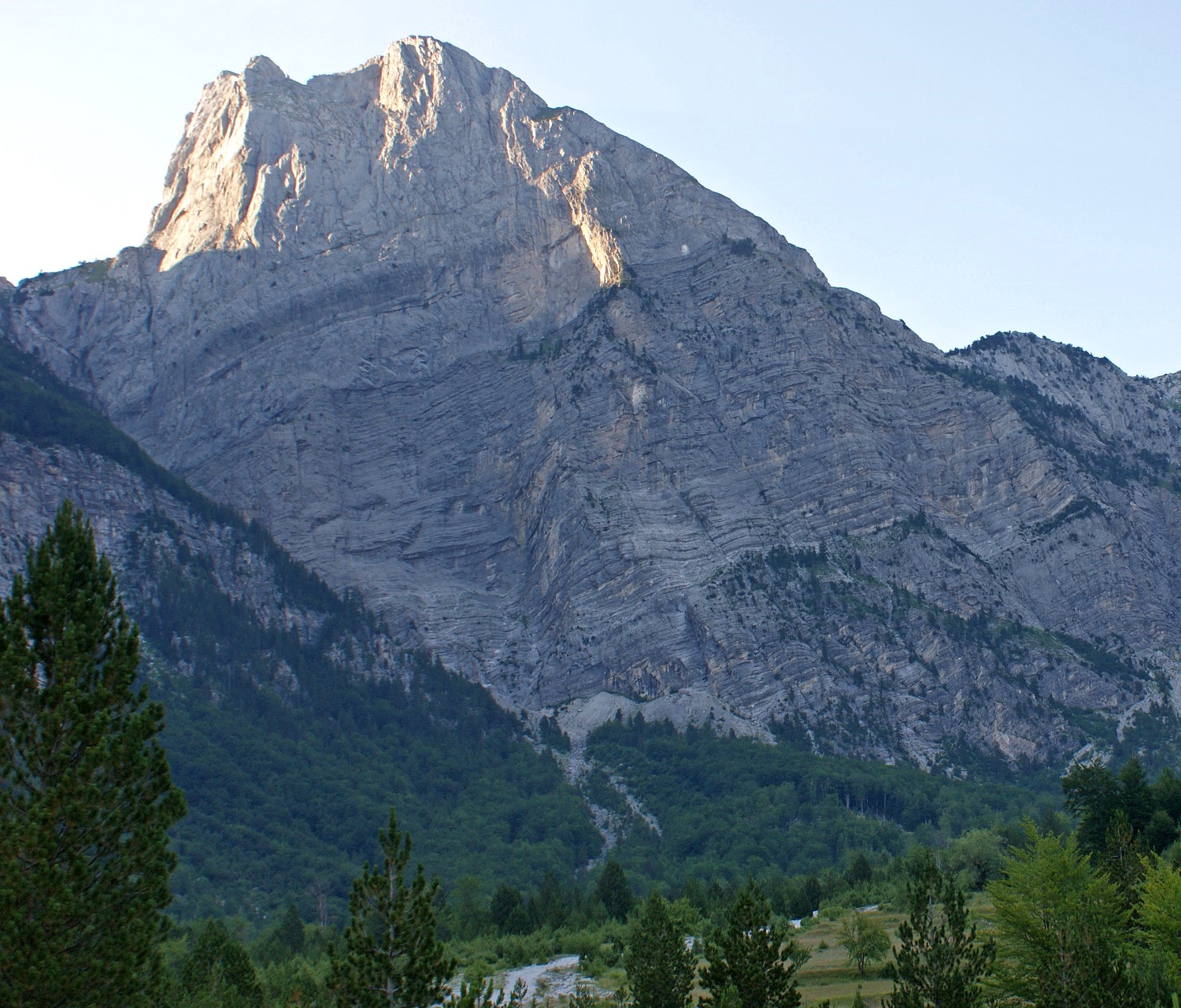
Maja e Harapit
The Balkans' Biggest Rock FaceOnly 2,218 metres (7,277 ft), but its south face rises about 800 metres in one unbroken sweep — the highest rock wall on the Balkan Peninsula. Seen from the Theth valley, it is one of the defining images of the Albanian Alps. This is a big-wall objective for climbers rather than hikers; most visitors admire it from the valley floor.
The Best Hikes in the Albanian Alps
The Alps are best experienced on foot, valley to valley. Here are the three walks that suit most travellers, from the famous crossing to gentle valley strolls.
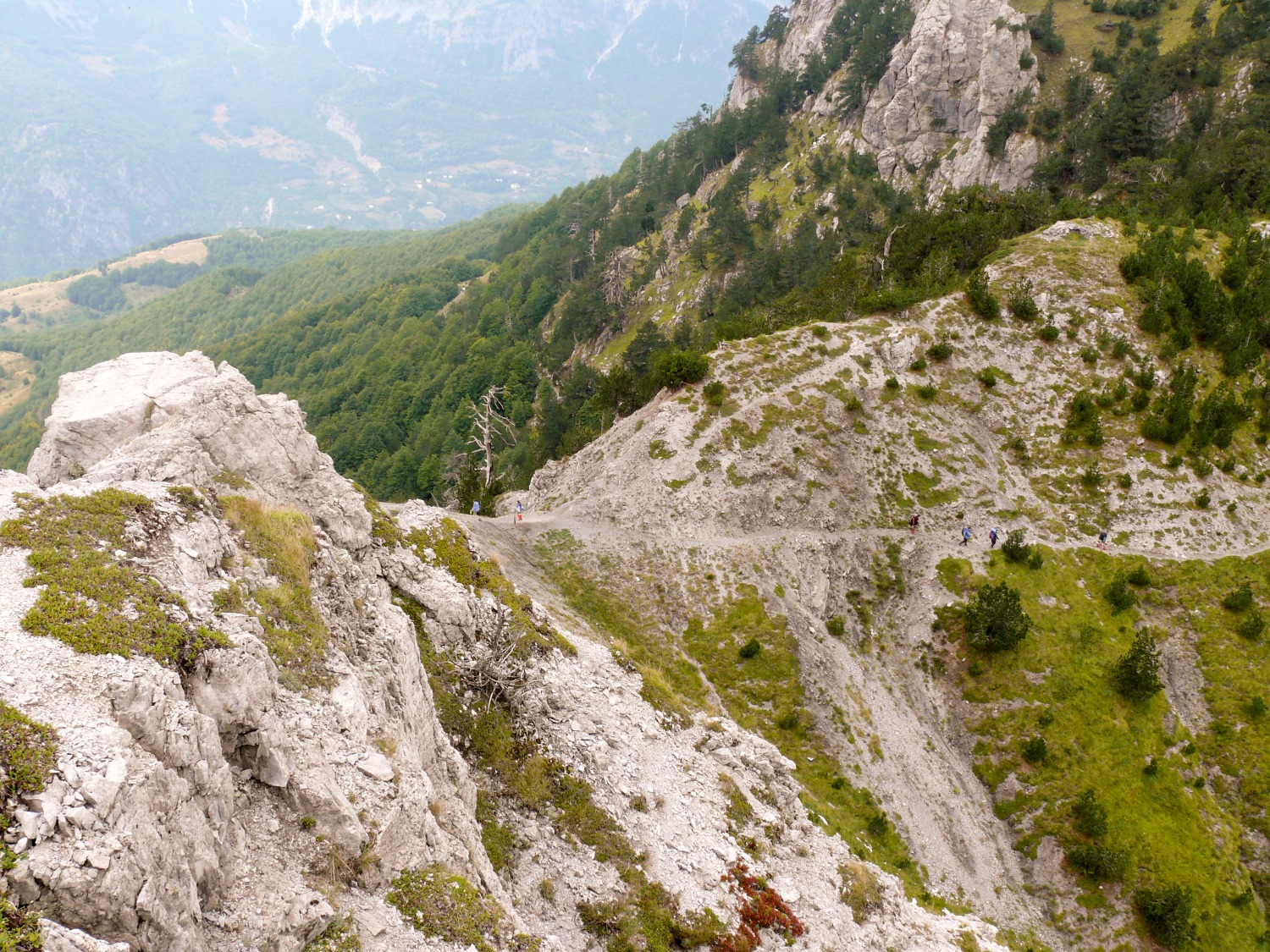
Theth to Valbona
The classic crossing over the Valbona Pass (1,795 m) — roughly 17 km in 6–7 hours, moderate, waymarked, and doable without a guide. The one hike everyone should do.
Maja Jezercë Summit
A serious, guided objective for experienced mountaineers, approached from the upper valleys. Route-finding, exposure and long days — not a casual hike.
Blue Eye of Theth & Grunas Waterfall
Easier day walks straight from Theth for travellers who want the scenery without a high pass. Perfect rest-day outings.
If you only do one, make it the Theth–Valbona crossing. If you have a spare day in Theth, the Blue Eye and Grunas Waterfall are both short, beautiful, and family-friendly.
Guesthouses in Theth & Valbonë
Sell Out Every Summer.
The best bujtina in the Alps fill up months ahead for July and August. Lock in your half-board mountain stay now — home cooking, packed lunches, and hosts who sort your transport and the Koman ferry.
Getting There: Shkodër and the Koman Ferry
Almost every Alps trip starts in Shkodër, the northwestern gateway city. From there you have two routes into the range — one to each valley.
Shkodër → Theth
Direct minibus from Shkodër (roughly two departures a day in season, around €12), about a 3-hour drive on a now-paved road. The simplest way in.
Shkodër → Valbonë via Koman Ferry
Minibus from Shkodër to Koman (~2 hrs), then the Koman–Fierzë ferry through the gorge (departs ~09:00, arrives ~11:30), then a transfer to Valbonë. Scenic and unforgettable.
Ferry Season
The Koman ferry runs daily in season, roughly mid-April to early November. Schedules shift year to year — confirm with your guesthouse the day before.
Getting to Shkodër
Shkodër is about 2 hours by car or bus from Tirana and its airport. Frequent buses and minibuses run throughout the day.
Where to Stay in the Albanian Alps
Family-run guesthouses are the soul of the Alps — and, for most routes, the only accommodation there is. Here is how to choose your base.
Theth
The best base for rest days, the Blue Eye, Grunas Waterfall, and the western end of the pass. The widest choice of bujtina in the range.
Valbonë
Quieter and wilder, at the eastern end of the crossing and the Koman ferry. Best if you want the higher eastern peaks and fewer people.
Shkodër
The place to organise logistics, stock up, and spend a night before or after the mountains. Full range of hotels and hostels.
Bujtina (family guesthouses) typically include half-board — home cooking, and hosts who arrange your transport and packed lunches. Book ahead for July and August; the best places fill months in advance.
Browse Albanian Alps accommodationBest Time to Visit the Albanian Alps
Unlike the coast, the Alps have a genuinely short season — timing is the single most important planning decision you'll make.
The high trails are realistically hikeable from late May or June to early October, once snow has cleared from the passes. Snow can linger on the high passes into June, and both the Koman ferry and most guesthouses run on a seasonal calendar that thins out by November.
July and August are the warmest and busiest months — beautiful weather, but booked-out guesthouses and busier trails. September is the connoisseur's choice: cooler, quieter hiking with stable weather and thinner crowds. The shoulder months reward anyone willing to plan around the ferry and guesthouse schedules.
Safety in the Albanian Alps
The waymarked valley routes are straightforward, but this is still a young, wild national park where the weather turns fast. A little preparation goes a long way.
High summits need a guide
Jezercë and Harapit are unmarked, exposed, and technical in places. Hire a local guide — do not attempt them on a trail blog alone.
Border awareness
The range meets Montenegro and Kosovo; some routes cross frontiers. Carry your passport.
Weather turns fast above 2,000 m
Start early, carry layers and rain protection, and tell your guesthouse your plan before you set out.
Leave no trace
The Alps of Albania National Park is young and fragile. Pack everything out, stick to the trails, and support the guesthouse economy that keeps these valleys alive.
Frequently Asked Questions About the Albanian Alps
Yes. "Albanian Alps," "Accursed Mountains," and the Balkan name "Prokletije" all refer to the same range — the southernmost and highest subrange of the Dinaric Alps. In Albanian it is called Bjeshkët e Nemuna, which translates as "the cursed mountains."
Maja Jezercë, at 2,694 m (8,839 ft), is the highest peak of the Albanian Alps and of the entire Dinaric Alps. Note that the highest mountain in Albania overall is Mount Korab (2,764 m), which sits in a separate range on the eastern border with North Macedonia.
The Theth to Valbona crossing — about 17 km, 6–7 hours, rated moderate, and waymarked so you can do it without a guide. It links the two most beautiful valleys in the range over the Valbona Pass (1,795 m) and is the single most popular route in the country.
Shkodër, in northwestern Albania. It is the launch point for both the Koman ferry (to Valbonë) and the direct minibuses to Theth, and the best place to organise logistics and spend a night before or after the mountains.
June to September is the reliable window. Snow lingers on the high passes into June, and the ferry and guesthouses thin out by November. July and August are busiest; September offers cooler, quieter hiking with stable weather.
For the waymarked Theth to Valbona crossing and the easy valley walks around Theth, no. For the high technical summits like Maja Jezercë and Maja e Harapit, yes — a local guide is strongly recommended, as the routes are unmarked and exposed.
Ready to Walk the Accursed Mountains?
Start with the headline hike in our Theth to Valbona guide, decide whether the high summits are for you with our Maja Jezercë profile, and see how the north compares to every other range in the country in our complete mountains in Albania guide.
The Albanian Alps are still one of Europe's last genuinely wild ranges — glaciated scenery, a living highland culture, and prices that make the rest of the continent look expensive. But the window is narrowing every summer as word gets out. Come now, while the valleys are still quiet.
Book Your Albanian Alps Guesthouse
Handpicked bujtina and guided treks in Theth, Valbonë and Shkodër. Book direct — no middlemen, no hidden fees, best rate guaranteed.