Borsh Beach: The Longest Beach on the Albanian Riviera
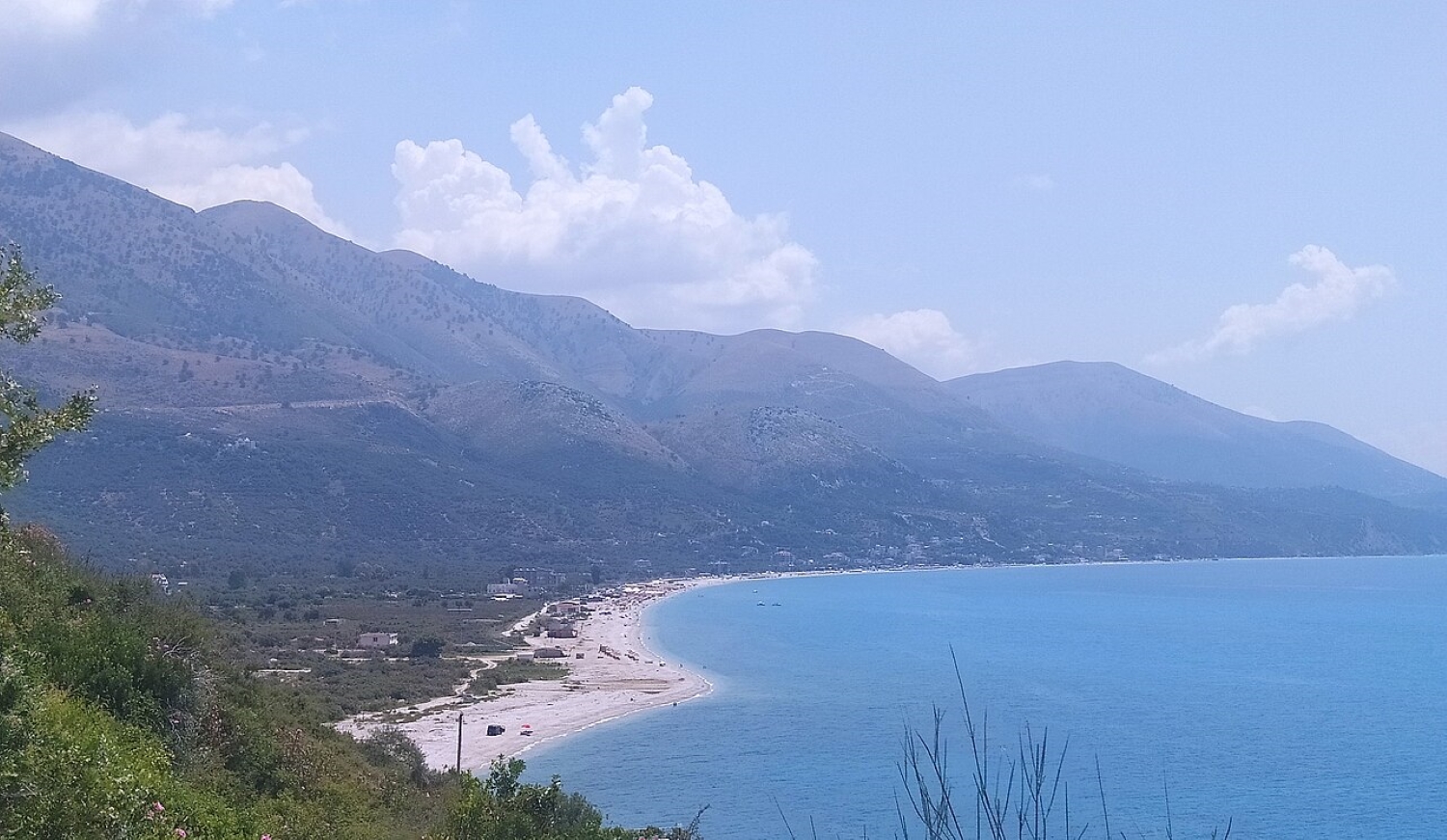
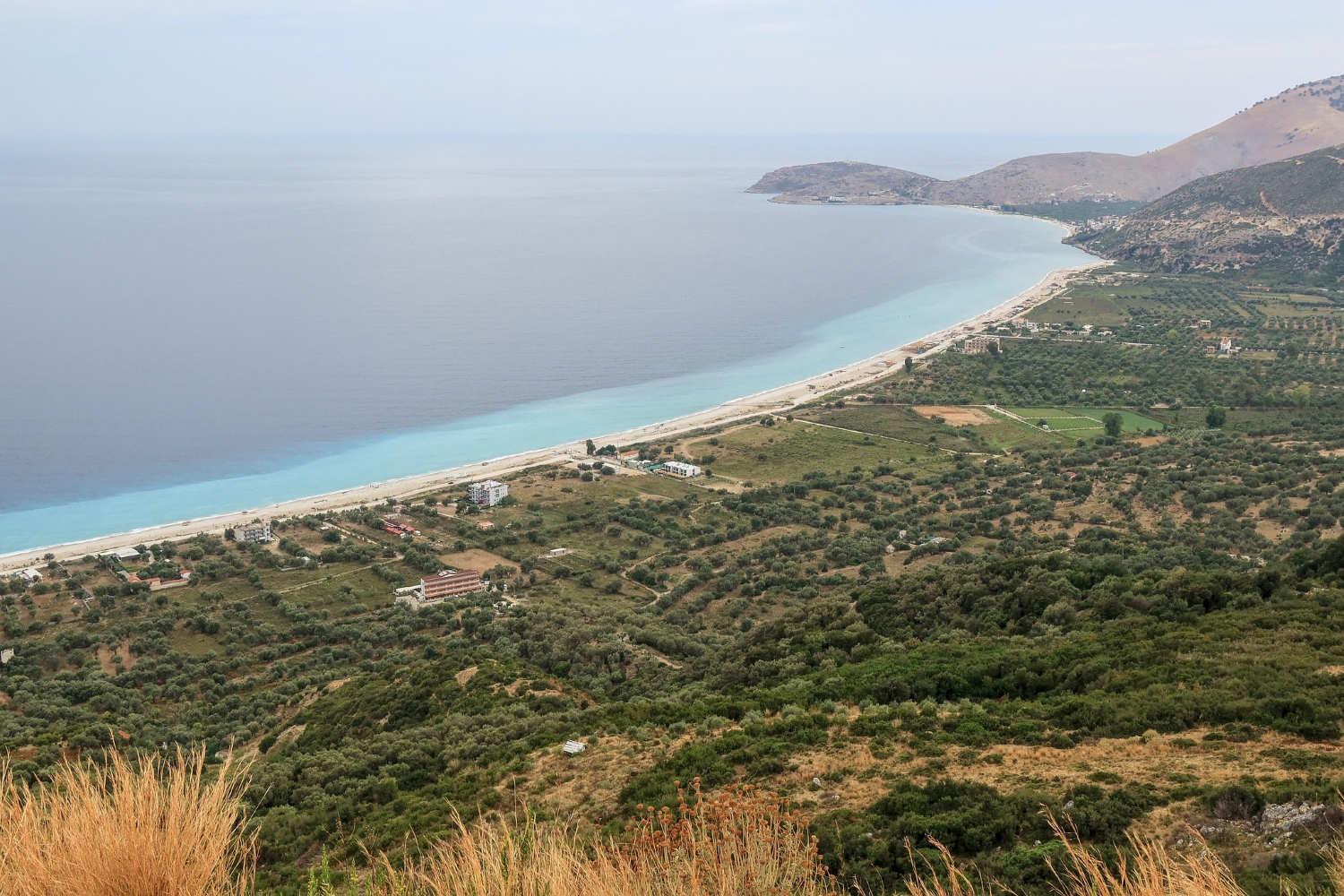
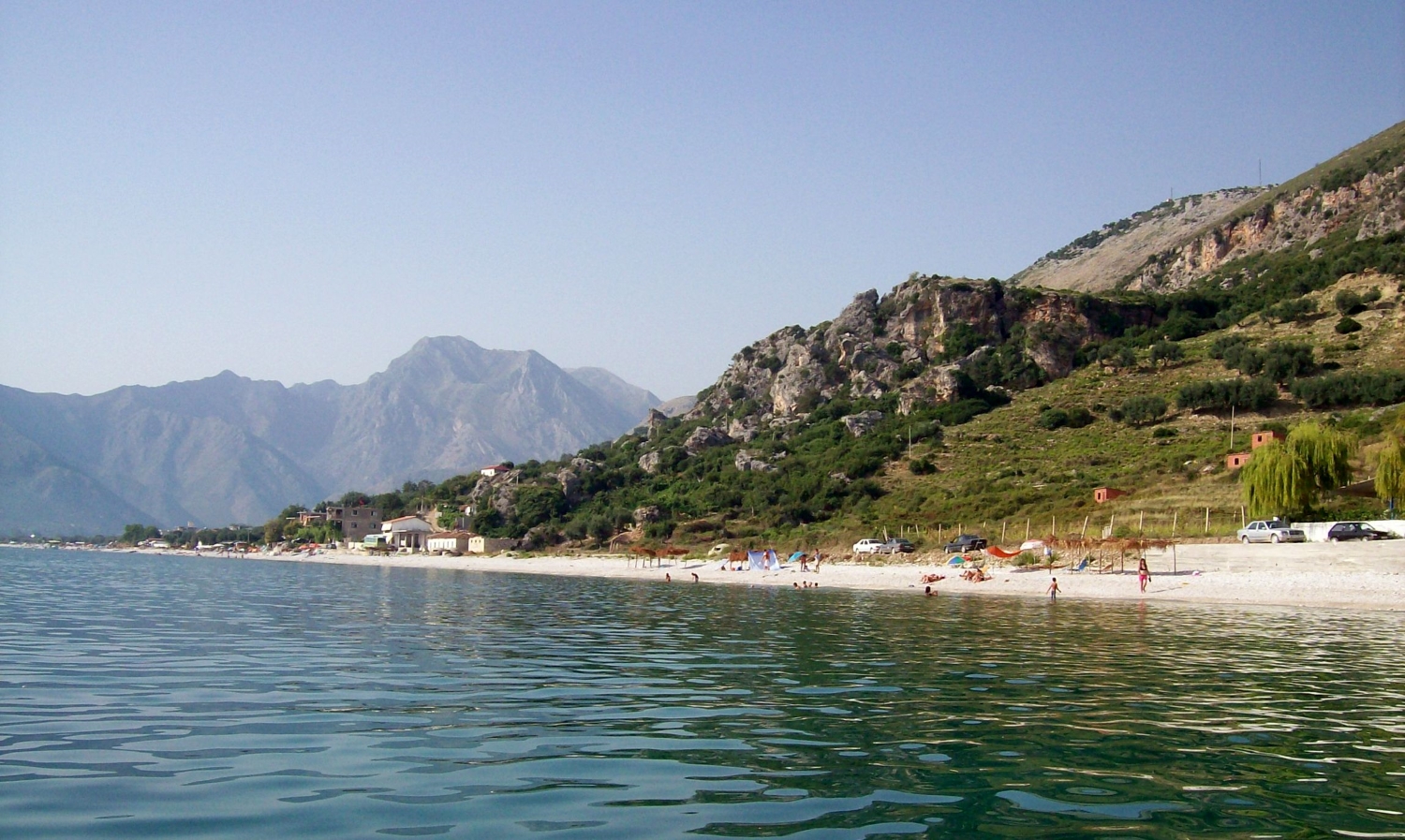
Borsh Beach — Plazhi i Borshit — stretches for approximately 7 kilometres along the Ionian coast, making it the longest beach in southern Albania. It sits about 18 km south of Himara on the SH8 coastal road, framed on one side by the Ionian Sea and on the other by an unbroken backdrop of olive groves and the mountain range that defines this part of the Albanian Riviera. The beach divides naturally into two distinct zones: a northern end with beach clubs, sunbeds, restaurants, and steady summer activity, and a southern end that fades into something closer to a wild beach — flat gravel, no shade, and very few people even in August. One beach, two completely different experiences.
← Back to Beaches in AlbaniaWhat Makes Borsh Beach Special
Seven kilometres is a number that sounds impressive on paper; on foot it feels genuinely vast. You can walk south from the main access road for 20 minutes and find yourself completely alone on a flat stretch of beach with nothing but olive trees on one side and open water on the other. That kind of space is rare on the Ionian coast, and it is what sets Borsh apart from the more photogenic but physically small coves like Gjipe or Aquarium Bay.
The northern section operates like a conventional beach resort: parking, restaurants right at the waterline, sun loungers for hire, jet ski operators, and beach bars. The south end is the opposite — no shade, no services, no infrastructure beyond the beach itself. Experienced travellers tend to drive to the north end, establish a base at one of the restaurants, and spend part of the day walking south to see the full length of the beach and the way the olive grove transitions into pure coastal scrubland.
The water entry is one of the best on the Riviera for families. The sand and gravel floor is gently sloping and very shallow — you can wade 10 metres from shore and still be waist-deep. There is no sudden drop-off, no significant current, and limited wave action.
Sand, Pebble or Rocky?
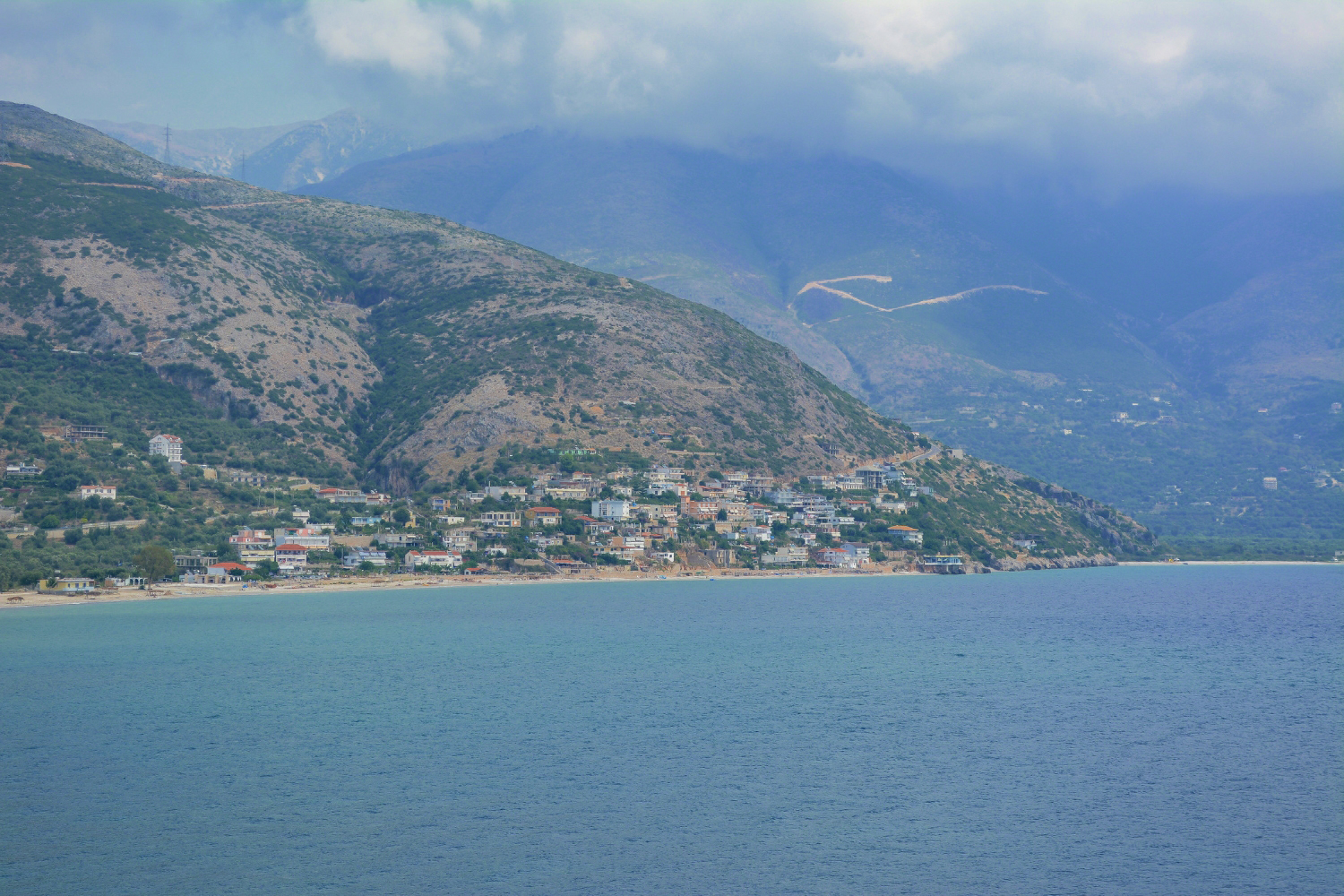
Borsh Beach is primarily a sand and fine gravel mix. The proportion shifts slightly along the length of the beach — the northern section has more visible sand, while the southern section becomes finer gravel. Neither end has the jagged volcanic rock of beaches like Aquarium Bay or the pure smooth pebble of Dhërmi. The surface is comfortable to walk on barefoot, though water shoes remain useful for the initial few steps of entry where the gravel gets slightly coarser.
Water Depth and Clarity
The entry is gradual and shallow throughout the beach's length — one of its main advantages for families. Water clarity is good; the fine sand/gravel mix does not cloud the water the way pure sand beaches sometimes do. Sea temperature peaks in August at approximately 25–27°C. Outside peak summer the water remains swimmable — September temperatures stay comfortably above 22°C.
Is It Safe for Swimming?
Yes, Borsh is one of the safer swimming beaches on the Albanian Riviera. The shallow, gradual entry, minimal wave action, and absence of strong currents make it suitable for children and non-confident swimmers. The beach is long and open, so visibility from the shore is good. There are no official lifeguards at the public sections; beach clubs at the north end have staff in attendance.
How to Get to Borsh Beach
By Car
From Himara, head south on the SH8 for 18 km (~25 min). Watch for the turn-off near the BOLV petrol station and follow 1 km toward the sea. From Saranda: ~40 km, 50–60 min. Free parking along the beach road.
By Bus
Any furgon on the Saranda–Himara coastal route stops near Borsh. Bus drops at the village (~2 km from beach, 25 min walk). Taxi options from the village are limited — arrange in advance.
By Boat
Not a standard boat-tour stop, but private charters from Himara or Saranda can anchor offshore. Speak with operators in Himara for flexible-itinerary day trips that pass the coast.
On Foot / Hiking
No practical hiking route from another beach. The coastal trail from Qeparo village is a multi-hour hike suited to serious trekkers rather than a casual access route.
Best Time to Visit Borsh Beach
June is the sweet spot: the water has warmed to a comfortable 22–24°C, the beach infrastructure (restaurants, sunbed operators) is open, crowds are light, and prices at local accommodation are 30–40% lower than July rates. July and August bring the most activity — the northern beach section fills up, but the sheer length prevents it from ever feeling truly packed. Walk 10 minutes south and the density drops sharply.
September offers warm water (22–25°C), noticeably lower crowds, and most beach facilities still open. October through May: the beach is virtually empty. The restaurants close for the season in late October. Vanlifers and off-season travellers who know the beach use it as a free camping ground in spring and autumn — the space is enormous and nobody objects.
Amenities and Facilities
Sunbeds & Umbrellas
Available at the organised northern section. Rates run 700–1,000 ALL (7–10 EUR) per day for a pair with umbrella. At several restaurants, sunbeds near the water are offered free to customers. The southern section has no sunbed rental.
Bars & Restaurants
Multiple restaurants and beach bars operate along the northern kilometre (June–late September). Seafood is the staple. A main course of grilled fish runs 800–1,500 ALL (8–15 EUR). Beach bars serve coffee from early morning.
Parking
Free parking along the beach access road. The lot is large and informal; even in peak season space is available given the beach's length and dispersed infrastructure.
Toilets & Showers
Outdoor showers available at several restaurant properties on the north end. Toilets for customers at restaurants. The southern section has no facilities.
Crowd Levels and Atmosphere
Borsh is the rare Albanian beach where the scale genuinely solves the crowd problem. Even in the busiest August weekend, 7 km of coastline means the per-metre density stays low. The north end in peak season has a relaxed family atmosphere: children swimming, adults on sunbeds, occasional jet ski noise in the background.
The south end, at any time of year, feels like a beach that has been left to its own devices. The olive grove backdrop, the absence of buildings, and the long sight lines give it a distinct character — expansive and quiet in a way that most coastal Albania is too rugged or too developed to offer.
Things to Do at Borsh Beach
Long Beach Walks
The full 7 km return walk is a genuine activity in itself. The changing character of the beach as you move from north to south makes it interesting, not just long.
Swimming and Snorkelling
The shallow entry and clear water make both easy. The north end is calmer; the rocky outcrops near the ends of the bay offer snorkelling.
Jet Ski Rental
Available at the north end in summer through local operators. Prices vary; negotiate before committing.
Borsh Castle
A 4th-century hilltop castle above the village is a 45-minute uphill walk from the main road. The views over the beach and coastline justify the effort.
Camping / Vanlife
The southern end is widely used for free camping in spring and autumn. The space is sufficient and there is no overnight enforcement.
Borsh Beach in Photos
Where to Stay Near Borsh Beach
For the best accommodation options near Borsh Beach — from beachside guesthouses to apartments with Ionian sea views — browse the full listings below.
Find the Perfect Stay Near Borsh Beach
From beachside guesthouses to sea-view apartments — browse handpicked accommodation and book instantly. No hidden fees.
Local Tips and Insider Advice
Nearby Beaches and Day Trips
Bunec Beach
A few kilometres south — quieter beach with a mountain stream crossing the sand and flowing into the sea.
Bunec guidePorto Palermo
20 minutes north — a sheltered bay with a historic Ottoman castle at the headland.
Porto Palermo guideJale Beach
Further north past Himara — organised and family-friendly with a social beach bar scene.
Jale guideQeparo Village
A short drive south — a partially-abandoned stone village perched above the coast with remarkable views.
Frequently Asked Questions
Yes. The beach is fully public. You only pay if you choose to rent sunbeds and umbrellas (700–1,000 ALL per day) at the organised sections. Large areas of the beach are free-access with no service.
It is one of the best family beaches on the Albanian Riviera. The shallow, gradual entry, absence of strong currents, and sheer length give children room to swim safely and run freely.
June and September offer the best balance of warm water, open facilities, and manageable crowds. July and August are busier but the scale of the beach keeps it from feeling overcrowded.
18 km south on the SH8, approximately 25 minutes by car. From Saranda it is around 40 km, taking 50–60 minutes.
Yes — free parking along the beach access road. Space is available even in peak season given the beach's length.
Informal camping is widely practised at the southern end of the beach, particularly in spring and autumn. There are no facilities at the south end. Camping Jungle near the north end offers organised pitches with basic amenities.